SIFs Vs Mutual Funds-Which did better in 2026?
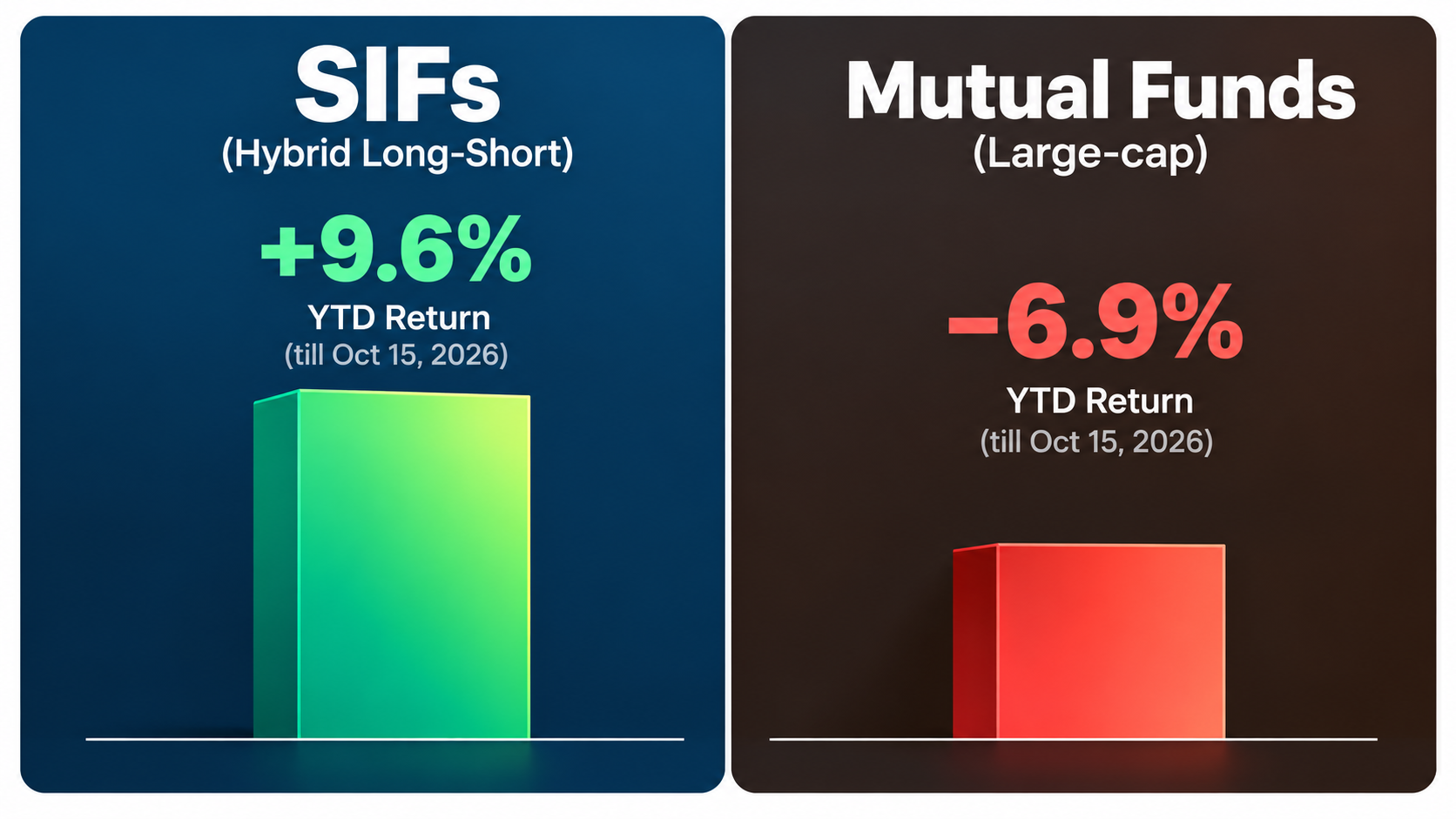
In this 'Fin Shorts' piece, we dive into the 2026 performance of Structured Investment Funds (SIFs) compared to traditional mutual funds. SIFs, a newer asset class, have shown potential as an attractive alternative for Indian investors. A key difference lies in their strategy: SIFs can employ short-selling and derivatives for downside management, unlike most conventional mutual funds that stick to long positions. It's also important to note that SIFs come with a higher entry barrier, requiring a minimum investment of ₹10 lakh per PAN. The data for 2026 up to October 15th indicates that hybrid long-short SIFs gained 9.6% year-to-date. In contrast, large-cap mutual funds saw a decline of 6.9%. This analysis sheds light on how different investment vehicles performed in the Indian market.
In this 'Fin Shorts' piece, we dive into the 2026 performance of Structured Investment Funds (SIFs) compared to traditional mutual funds. SIFs, a newer asset class, have shown potential as an attractive alternative for Indian investors. A key difference lies in their strategy: SIFs can employ short-selling and derivatives for downside management, unlike most conventional mutual funds that stick to long positions. It's also important to note that SIFs come with a higher entry barrier, requiring a minimum investment of ₹10 lakh per PAN. The data for 2026 up to October 15th indicates that hybrid long-short SIFs gained 9.6% year-to-date. In contrast, large-cap mutual funds saw a decline of 6.9%. This analysis sheds light on how different investment vehicles performed in the Indian market.