South Korean Pension Fund Seeks India Government Bond Investment Licence
This Fin Shorts story covers the significant development of South Korea's National Pension Service (NPS), one of the world's largest pension funds, seeking a license to invest directly in Indian government bonds. With assets under management around $1.3 trillion, the NPS's interest highlights the growing attractiveness of the Indian bond market to global institutional investors. India’s 10-year government bond yield, currently hovering near 7%, offers competitive returns, especially when considering potential rupee weakness which can enhance returns for foreign investors. While foreign portfolio investors (FPIs) already hold a substantial portion in Indian government debt, direct participation by large pension funds like the NPS could mark a new phase of foreign investment in India. This move could lead to increased liquidity and potentially influence bond yields India, reflecting evolving SEBI FPI rules and the increasing global appetite for sovereign bonds from emerging markets like India.
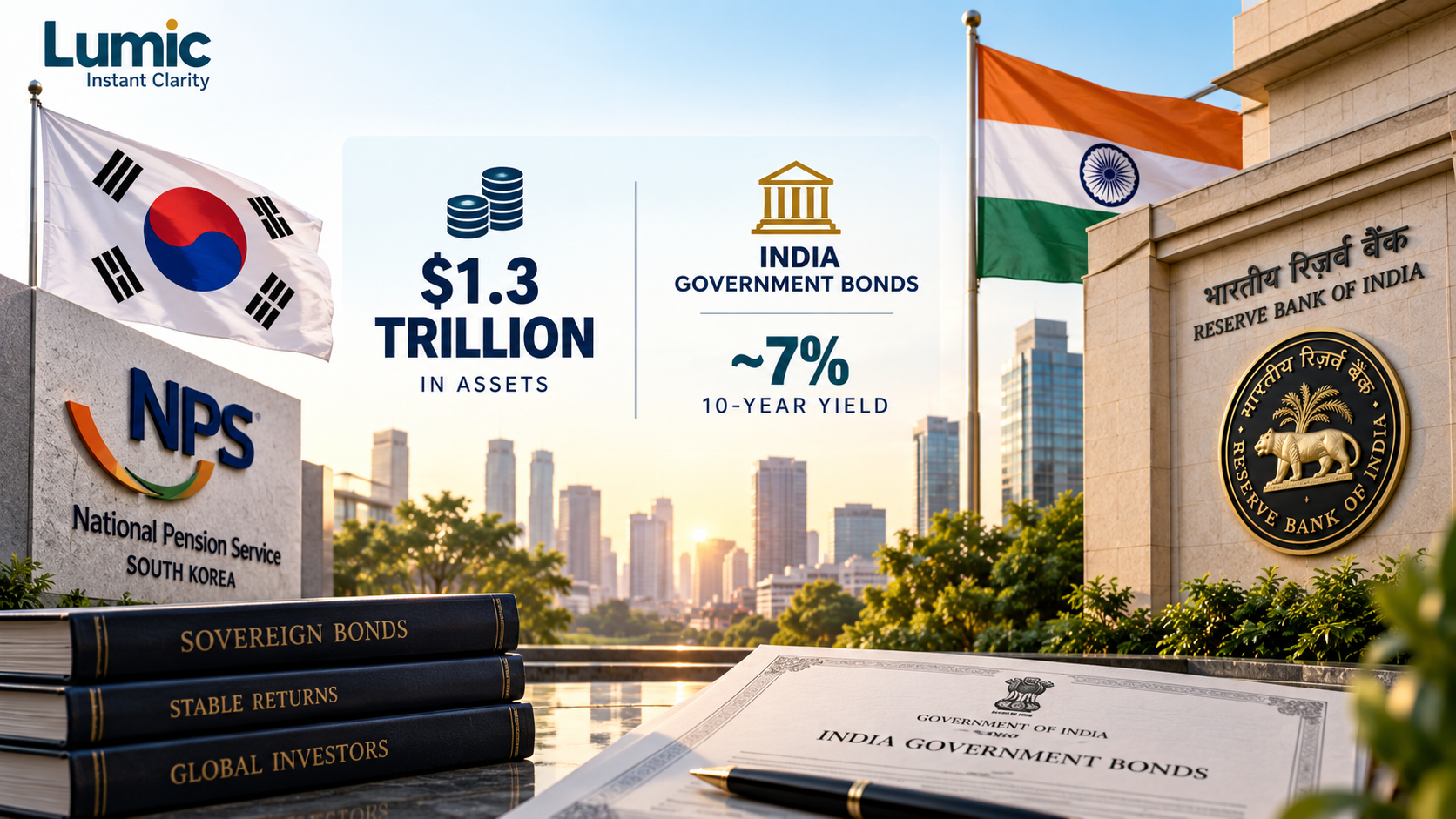
This Fin Shorts story covers the significant development of South Korea's National Pension Service (NPS), one of the world's largest pension funds, seeking a license to invest directly in Indian government bonds. With assets under management around $1.3 trillion, the NPS's interest highlights the growing attractiveness of the Indian bond market to global institutional investors. India’s 10-year government bond yield, currently hovering near 7%, offers competitive returns, especially when considering potential rupee weakness which can enhance returns for foreign investors. While foreign portfolio investors (FPIs) already hold a substantial portion in Indian government debt, direct participation by large pension funds like the NPS could mark a new phase of foreign investment in India. This move could lead to increased liquidity and potentially influence bond yields India, reflecting evolving SEBI FPI rules and the increasing global appetite for sovereign bonds from emerging markets like India.