Banking
The Future of Payments in India: UPI, Digital Wallets, and the Evolution of Transaction Technology
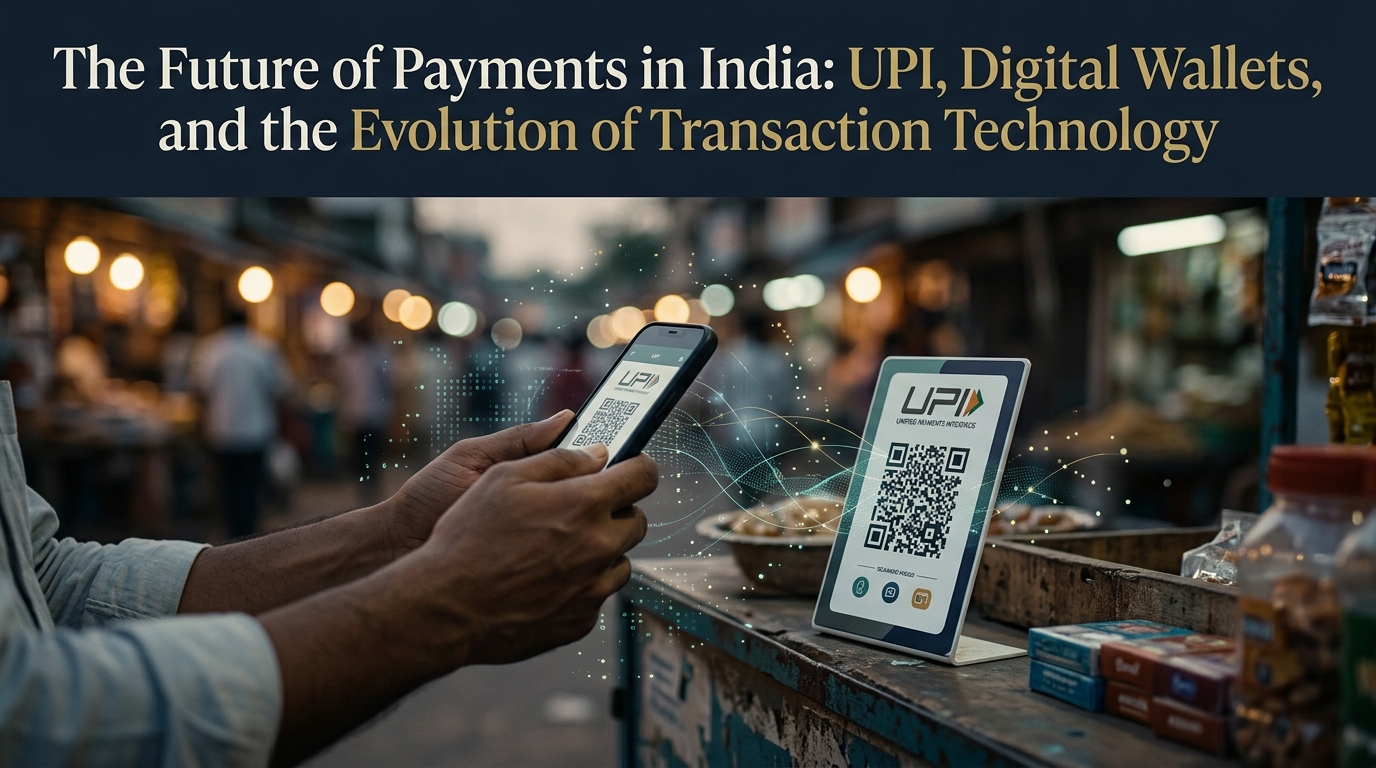
India stands at the forefront of a global digital revolution, particularly in how its citizens conduct financial transactions. Over the past decade, the landscape of payments has undergone a profound metamorphosis, shifting from a predominantly cash-driven economy to one increasingly reliant on digital methods. This seismic shift is not merely a convenience but a fundamental re-engineering of financial interactions, driven by innovation, accessibility, and strategic government initiatives. For Indian professionals, understanding this evolution is crucial, as it impacts everything from daily commutes to large-scale business operations.
The Rise of UPI and its Impact on Digital Transactions
At the heart of India's digital payment transformation lies the Unified Payments Interface (UPI). Launched in 2016 by the National Payments Corporation of India (NPCI), UPI is an instant real-time payment system that facilitates inter-bank peer-to-peer (P2P) and person-to-merchant (P2M) transactions. Its simplicity, speed, and interoperability across various banking applications have made it an unprecedented success story, cementing its role as a cornerstone of UPI payments India.
Before UPI, digital transactions often involved cumbersome bank transfers or limited wallet-to-wallet payments. UPI democratised digital payments by allowing users to link multiple bank accounts to a single mobile application and make payments using a Virtual Payment Address (VPA) or a mobile number, without needing to share sensitive bank details. This ease of use quickly propelled it into mainstream adoption.
The impact has been staggering. From street vendors accepting payments via QR codes to large retail chains integrating UPI into their checkout systems, UPI has woven itself into the fabric of daily commerce. It has significantly reduced the reliance on physical cash, improved transaction speed, and fostered a culture of digital literacy even in rural areas. The sheer volume of transactions processed by UPI monthly is a testament to its success, consistently breaking new records and solidifying its position as a leading example of the future of payments India.
Moreover, UPI's open-source architecture has encouraged innovation, allowing various fintech companies and banks to build their applications on top of the platform, fostering a vibrant ecosystem. This collaborative approach has been instrumental in extending the reach of digital payments to every corner of the country.
Comparing Popular Digital Wallets and Their Features
While UPI provides the underlying rails for many transactions, digital wallets serve as the primary interface for millions of users. These mobile applications offer a holistic payment experience, often integrating UPI alongside other functionalities like bill payments, recharges, ticket bookings, and even investment options. The landscape of digital wallets India is competitive, with major players vying for user attention through convenience and innovative features.
Paytm
One of the pioneers in India's digital wallet space, Paytm evolved from a mobile recharge platform to a comprehensive digital payments ecosystem. It offers a wide array of services, including mobile and DTH recharges, utility bill payments, movie tickets, travel bookings, and merchant payments. Paytm also operates a payments bank, providing users with a savings account linked to their wallet.
Google Pay (formerly Tez)
Leveraging Google's extensive user base and robust technology, Google Pay quickly gained traction in India. It primarily focuses on UPI-based transactions, offering a clean interface and strong security features. Its integration with existing bank accounts makes it particularly appealing for users seeking direct bank-to-bank transfers without the need to preload a separate wallet.
PhonePe
Another dominant player, PhonePe, is known for its strong focus on UPI. Acquired by Flipkart, it offers a broad spectrum of services, from money transfers and utility payments to insurance and financial services. PhonePe has also made significant inroads into merchant acquisition, making it ubiquitous across small and large businesses.
Other Wallets
Players like Amazon Pay, MobiKwik, and JioMoney also contribute to the diverse digital wallet ecosystem, each offering unique features and integrations, often catering to specific customer segments or e-commerce platforms.
These digital wallets have not only simplified transactions but have also become integral to the daily financial lives of urban and semi-urban professionals, offering unparalleled convenience and a gateway to a broader digital economy. While many wallets now primarily leverage UPI for direct bank transfers, their 'wallet' functionality often remains for small, immediate top-ups or specific merchant agreements.
Emerging Payment Technologies Like QR Codes and Contactless Payments
The evolution of payment technology extends beyond just UPI and digital wallets to the very mechanisms of transaction. Online transaction trends are increasingly pointing towards solutions that prioritise speed, security, and minimal physical interaction.
QR Code Payments
Quick Response (QR) codes have become ubiquitous in India, largely propelled by UPI. A simple scan of a merchant's QR code with any UPI-enabled app facilitates an instant payment. This technology is incredibly low-cost for merchants, requiring only a printed code, and highly convenient for customers. Its adoption has been a significant driver in bringing even micro-merchants into the digital fold, showcasing a key aspect of the future of payments India.
Contactless Payments (NFC)
Near Field Communication (NFC) technology enables 'tap-and-pay' transactions using debit/credit cards, smartphones, or wearables. Instead of swiping or inserting a card, users simply tap their device or card on a compatible POS (Point of Sale) terminal. While initially slower to adopt than QR codes, contactless payments are gaining momentum, particularly with the proliferation of NFC-enabled smartphones and bank cards. They offer enhanced speed and security, as the card never leaves the user's hand, reducing the risk of skimming or cloning.
Sound-based Payments
Although less prevalent, technologies like sound-based payments (e.g., using ultrasonic sound waves for data transfer) have also seen experimental deployment, offering alternatives for low-tech environments or specific use cases.
These emerging technologies are continuously refining the user experience, making transactions faster, more secure, and integrated seamlessly into various daily activities.
Security Considerations in Digital Payments
While the convenience of digital payments is undeniable, it is equally important for users and service providers to remain vigilant about security. As online transaction trends grow, so do the sophistication of cyber threats. Safeguarding personal and financial data is paramount to sustaining trust in the digital ecosystem.
Common security concerns include:
- Phishing and Smishing: Fraudulent attempts to obtain sensitive information (e.g., UPI PINs, OTPs, bank details) by impersonating legitimate entities through fake emails, messages, or calls.
- Malware and Spyware: Malicious software designed to steal data or compromise devices, often disguised as legitimate apps or links.
- Public Wi-Fi Vulnerabilities: Unsecured public networks can be susceptible to eavesdropping, making transactions over them risky.
- SIM Swapping: Fraudsters port a user's mobile number to a new SIM card, gaining access to OTPs and bank alerts.
To mitigate these risks, users should adopt best practices:
- Always use strong, unique passwords and enable two-factor authentication (2FA) wherever possible.
- Be wary of unsolicited links or messages; always verify the sender's authenticity.
- Download apps only from official app stores.
- Regularly review transaction history and bank statements for suspicious activity.
- Never share your UPI PIN, OTPs, or credit card CVV with anyone.
- Use secure, private networks for financial transactions.
- Consider enabling features like device locking and remote wipe for lost or stolen phones.
Service providers, regulated by entities like the Reserve Bank of India (RBI), implement robust encryption, fraud detection algorithms, and authentication protocols. However, user awareness remains the first line of defense in ensuring secure UPI payments India and other digital transactions.
Government Initiatives Promoting Digital Payments
The Indian government has played a pivotal role in accelerating the adoption of digital payments, viewing it as crucial for financial inclusion, transparency, and economic growth. Several key initiatives underscore this commitment:
- Digital India Campaign: Launched in 2015, this flagship program aims to transform India into a digitally empowered society and knowledge economy. Promoting digital payments is a core pillar, encouraging citizens and businesses to embrace cashless transactions.
- Jan Dhan Yojana: While not directly a payment system, the Pradhan Mantri Jan Dhan Yojana (PMJDY) scheme, which provides universal access to banking facilities, has been instrumental in bringing millions into the formal financial system. This broadens the base for digital payment adoption by giving more people access to bank accounts.
- Aadhaar-Enabled Payment System (AePS): AePS allows bank customers to use their Aadhaar number to access basic banking services like cash withdrawal, balance enquiry, and fund transfers at micro-ATMs and PoS terminals. This is particularly impactful in rural areas where traditional banking infrastructure is scarce.
- RuPay Card: India's indigenous card payment network, RuPay, launched by NPCI, provides an alternative to international card schemes like Visa and Mastercard. It aims to reduce transaction costs and keep data within India, further bolstering the domestic payments infrastructure.
- Incentives and Subsidies: The government and RBI have periodically introduced incentives, such as lower transaction fees for digital payments and promotional campaigns, to encourage both consumers and merchants to shift away from cash.
The cumulative effect of these initiatives has been a rapid expansion of the digital payment footprint, making the future of payments India increasingly cashless and efficient. The RBI's continuous regulatory oversight also ensures the stability and security of these systems. Learn more about the RBI's influence on the broader financial market by exploring how interest rate decisions shape loans and investments.
Predicting the Next Wave of Payment Innovations in India
Looking ahead, the trajectory of payment innovation in India promises even more transformative changes. The foundation laid by UPI and digital wallets is robust, setting the stage for advanced technologies to reshape online transaction trends.
- Central Bank Digital Currency (CBDC) - Digital Rupee: The RBI has already launched pilot programs for a Digital Rupee (e₹), India's own CBDC. This aims to provide a sovereign-backed digital currency, offering the benefits of digital transactions with the inherent security and stability of fiat money. Its widespread adoption could significantly alter the payment landscape, providing a direct digital alternative to physical cash.
- Blockchain and Distributed Ledger Technology (DLT): While nascent in mainstream payments, blockchain technology holds potential for secure, transparent, and immutable record-keeping. It could find applications in cross-border payments, supply chain finance, and inter-bank settlements, improving efficiency and reducing costs.
- Internet of Things (IoT) Payments: As more devices become connected, the concept of 'invisible payments' via IoT devices (e.g., smart cars paying for fuel, smart refrigerators ordering groceries) could become a reality. This would embed payment functionality directly into objects, making transactions seamless and automated.
- Artificial Intelligence (AI) and Machine Learning (ML): AI and ML are already used in fraud detection and personalized financial services. In the future, they could power predictive payment suggestions, highly personalized offers, and even automated financial management tools, further enhancing the user experience and security.
- Voice-Activated Payments: With the rise of smart speakers and voice assistants, voice-activated payments could become more common, offering a hands-free way to transact, especially useful in certain environments or for accessibility.
These innovations signal a future where payments are not just a transaction but an integrated, intelligent, and invisible part of our digital lives, constantly evolving to meet user needs and enhance financial efficiency. Professionals should also understand how their choices in payment methods, like credit cards, can impact their financial health. For instance, knowing how to choose your first credit card can set a good foundation. Similarly, managing credit responsibly is key to maintaining a healthy CIBIL Score.
Conclusion
The journey of payments in India, from its cash-centric past to its digitally advanced present, is a remarkable story of rapid innovation and widespread adoption. UPI, digital wallets, and emerging technologies have collectively reshaped how individuals and businesses interact financially. As India continues to embrace new technologies and government support solidifies the digital infrastructure, the future of payments India is poised for even greater dynamism and sophistication. For professionals, staying informed about these developments is not just about convenience; it's about leveraging the tools that empower smarter financial management and participation in a progressively digital economy.
Disclaimer: This article is for informational purposes only and does not constitute financial advice. Readers should consult with a qualified financial advisor before making any investment decisions.