Investing
Active vs Passive Mutual Funds: Which Is Better for You?

Meera had been investing in mutual funds for two years. She did that by picking whatever her advisor recommended, without asking too many questions.
Then a friend mentioned he'd moved most of his portfolio into "passive funds" because they were "cheaper and just as good." Meera's next SIP (Systematic Investment Plan) payment was due in three days, and suddenly she was unsure about her investment plan.
If you've found yourself in the same spot hearing terms like active and passive mutual funds thrown around and wondering what they actually mean for your money this guide breaks it down in plain language.
Key Takeaways
- Active funds aim to beat the market through manager-driven stock selection and typically charge higher expense ratios.
- Passive funds aim to match a benchmark index, usually at a lower cost, without active stock-picking.
- Cost compounds over time; even a small expense ratio gap can meaningfully affect long-term returns on the same investment.
- Outperformance isn't guaranteed for active funds, and passive funds aren't designed to beat the market they're designed to track it.
- Neither option is universally better; the right choice depends on your goals, risk appetite, and how much you value predictability versus the possibility of outperformance.
- Many investors use both, combining low-cost passive funds with select active funds rather than choosing exclusively one or the other.
What Is an Active Mutual Fund?
An active mutual fund is one where a fund manager actively picks which stocks or bonds to buy and sell. The aim is to beat a benchmark index, like the Nifty 50 or Sensex.
The manager and their research team constantly analyse companies, sectors, and market trends, adjusting the portfolio. They try to generate higher returns than the market average.
It's like hiring a driver who actively changes lanes, takes shortcuts, and reroutes based on traffic. The goal is to reach the destination faster than someone just following the highway signs.
What Is a Passive Fund?
A passive fund simply tracks a market index, like the Nifty 50 or Sensex, and holds the same stocks in the same proportion as that index. There's no active stock-picking involved. The fund's goal is to match the market's pace and performance.
Index funds and most Exchange Traded Funds (ETFs) fall under this category.
Going back to the driving analogy, a passive fund is like using cruise control on the highway. No lane changes, no shortcuts just steady movement in line with the road (the index).
Active vs Passive Mutual Funds: The Core Differences
Here's where Meera's confusion started clearing up once she saw the two side by side. The differences in active vs passive investing became much easier to grasp:
| Factor | Active Mutual Funds | Passive Mutual Funds |
|---|---|---|
| Objective | Beat the benchmark index | Match the benchmark index |
| Fund manager's role | Actively selects and adjusts holdings | Simply mirrors the index composition |
| Expense ratio | Generally higher | Generally lower |
| Portfolio turnover | Higher more frequent buying/selling | Lower changes only when the index changes |
| Potential for outperformance | Possible, but not guaranteed | Not designed to outperform |
| Transparency | Holdings can shift; less predictable | Holdings mirror a known index |
| Tracking error | Not applicable in the same sense | Small deviations from the index's actual return |
Neither column is automatically "better"; it depends on what an investor values the possibility of beating the market (with no guarantee of it happening), or a predictable, lower-cost approach that mirrors the market.
Why Does the Expense Ratio Difference Matter So Much?
This was the point that actually got Meera's attention. Because active funds involve research teams, frequent trading, and active management, they typically charge a higher expense ratio than passive funds, which simply replicate an index with minimal intervention.
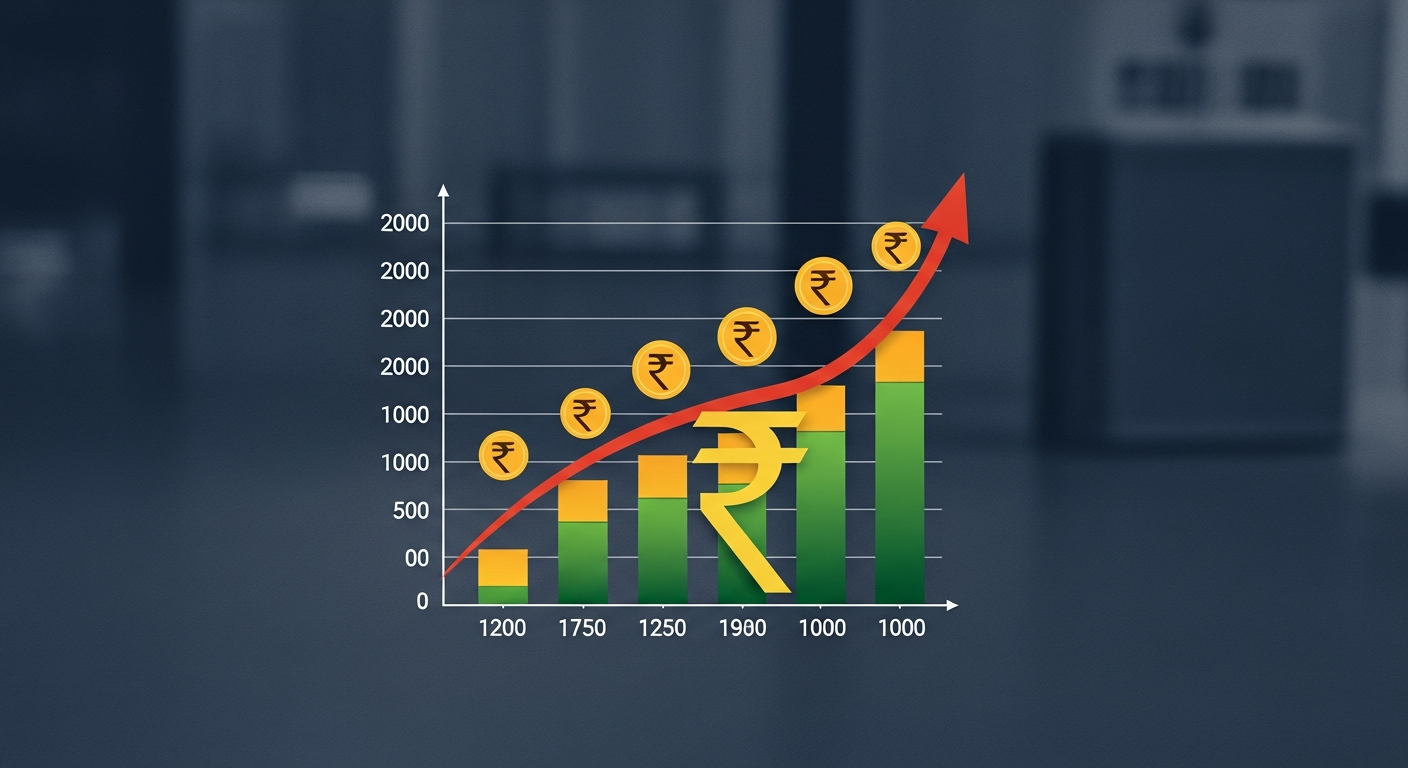
Here's a simplified, illustrative example of how that gap can add up over time on a hypothetical ₹5,00,000 investment held for 10 years, assuming the same gross annual return for both funds before fees:
| Item | Active Fund (illustrative) | Passive Fund (illustrative) |
|---|---|---|
| Initial investment | ₹5,00,000 | ₹5,00,000 |
| Assumed gross annual return | 12% | 12% |
| Expense ratio (illustrative) | 1.5% | 0.3% |
| Net annual return (illustrative) | 10.5% | 11.7% |
NOTE: This example uses assumed, illustrative figures only; actual expense ratios and returns vary by scheme, fund house, and market conditions, and mutual fund investments are subject to market risk.
The point is understanding that even a small difference in expense ratio can have a significant impact on long-term investment growth. Over time, these costs can eat into the power of compounding in India, making expense ratio an important factor when comparing active and passive funds.
Passive Investing vs Active Investing: What About Actual Returns?
Some active funds do outperform their benchmark in a given period, and some don't. Passive funds, by design, aim to closely match the index rather than beat it, and typically underperform it slightly due to costs and tracking error.
You cannot assume an active fund will continue its past outperformance. Performance can vary by fund category, market conditions, and fund manager, and past performance does not guarantee future returns.
Instead of chasing last year's best-performing active fund, look for consistent performance across multiple market cycles and weigh it against the higher cost of active management.
Difference Between Active and Passive Funds: A Quick Recap
To put the difference between active and passive funds in one place:
- Active funds try to beat the market through manager decisions, cost more, and may or may not outperform in any given period.
- Passive funds try to match the market through index replication, cost less, and are designed for predictable, benchmark-aligned performance.
- Active funds suit investors comfortable with manager-driven strategy and willing to pay for the possibility of outperformance.
- Passive funds suit investors who prefer low costs, simplicity, and returns that closely track a known index.
Which One Fits Your Investment Goals?
Rather than treating this as an either/or decision, it helps to think about what you're optimising for:
- If keeping costs low and having predictable, index-aligned exposure matters most to you, passive funds are generally built for that.
- If you're comfortable with higher costs in exchange for the possibility (not certainty) of beating the market, and you trust a specific fund manager's track record and process, an active fund could fit.
- If you're not sure, many investors choose to hold both using passive funds as a low-cost "core" and active funds selectively for specific goals or market segments.
- There's no universally "better" answer between active and passive mutual funds; the right mix depends on your risk appetite, investment horizon, and how much you want to actively track fund performance versus set it and forget it.
Things to Check Before Choosing Between Active and Passive Funds
- Expense ratio of the specific scheme, not just the category average
- The fund's track record across multiple market cycles, not just a strong recent year
- Tracking error, if you're evaluating a passive fund or index fund
- Fund manager's tenure and consistency, if evaluating an active fund
- Your own investment horizon and risk tolerance
- Whether you're investing through a lump sum or SIP, since costs and volatility exposure play out differently
- The fund's category and benchmark, to ensure a fair comparison
Conclusion
The active vs passive mutual funds debate isn't really about which category wins. It's about matching the fund type to what you actually want from your investment.
Active funds offer the possibility of beating the market at a higher cost and with no guarantee of doing so. Passive funds offer low-cost, predictable exposure that mirrors the market rather than trying to beat it.
Understanding this difference rather than just picking whatever's trending is what actually helps you choose a fund that fits your financial goals.
Disclaimer: This article is for educational purposes only and does not constitute investment advice. Mutual fund investments are subject to market risks. Please read all scheme-related documents carefully before investing.